What problem does Legease solve?
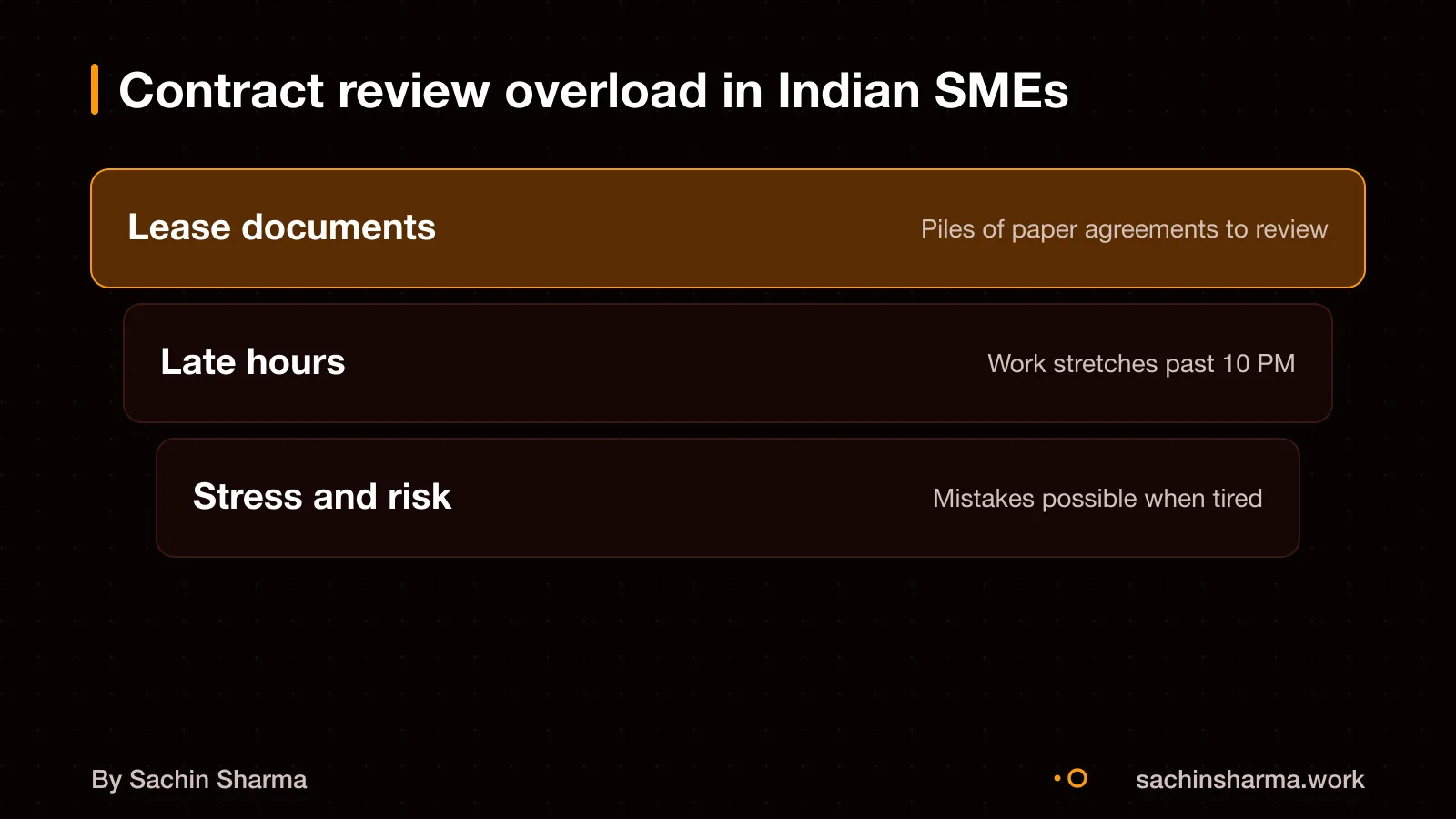
Contract review is slow and costly for Indian businesses, often needing legal experts to read every line. Legease cuts this time by reading documents and explaining them in plain language. It shows which clauses are normal, which are risky, and what you should ask about before signing. This helps non-lawyers understand key risks without replacing a lawyer. You can then decide whether to seek legal advice.
how Aashwasan handles agreements
What tech was used to build Legease?
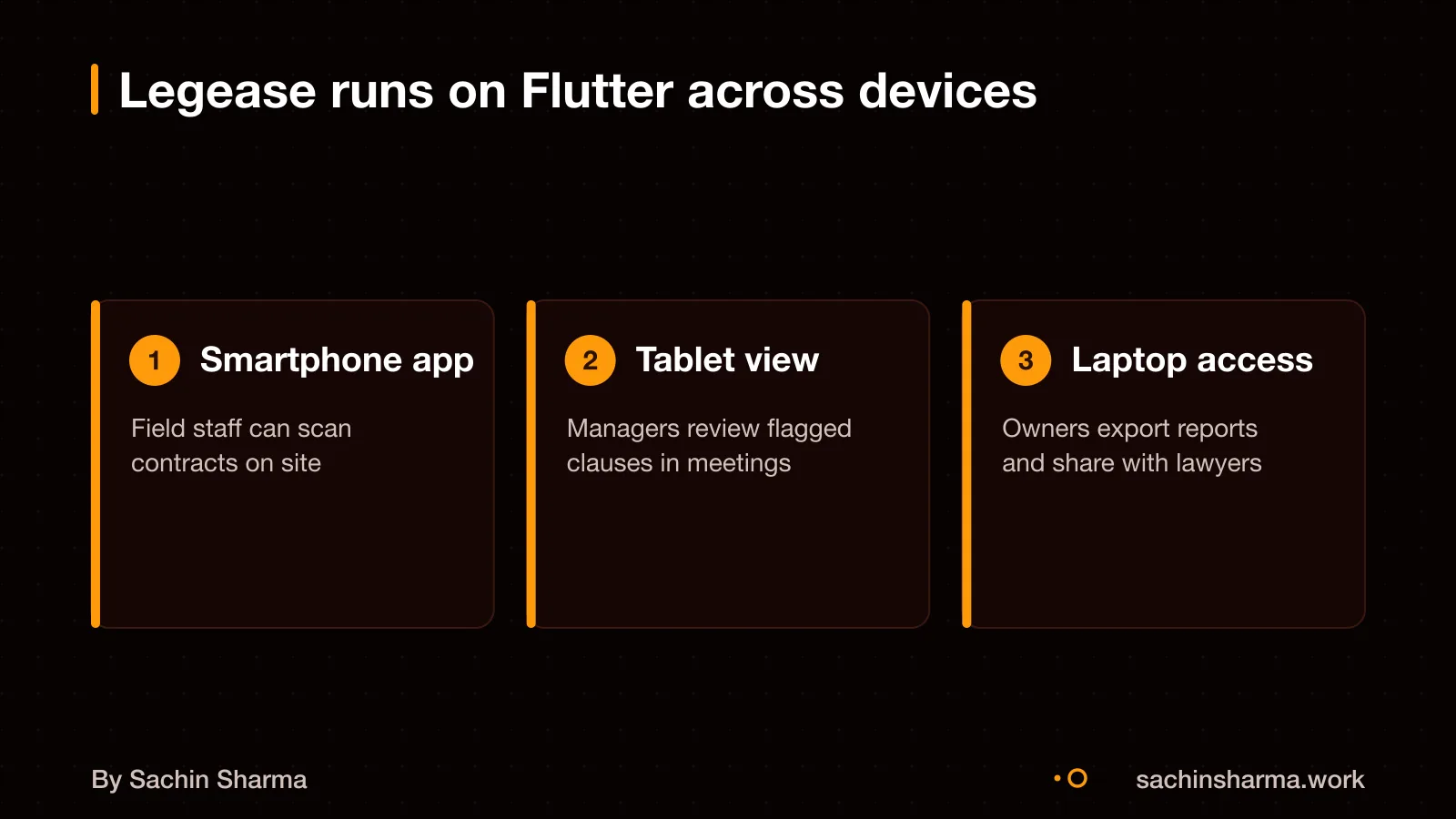
Legease is built with Flutter, which lets it run on iOS, Android, Web and Desktop from one codebase. This cuts development time and cost for Indian businesses that need apps across many devices.
For PDF handling, Legease uses the `syncfusion_flutter_pdfviewer` package to render documents clearly. To let users import contracts from their device, it uses `file_picker`. The app uses `google_fonts` for clear, consistent text display across devices. It also uses `lottie` to add light animations that guide users without slowing the app.
These tools are all stable, open-source or commercially supported packages. They work offline-first, which fits Indian users who may have spotty internet. For more on why mobile app development in Flutter suits Indian use cases, see the guide to mobile app development in Flutter.
How is Legease different from Legitt AI or SpotDraft?
Legease is built as a mobile-first AI legal tool, while Legitt AI and SpotDraft are web-based platforms. You can use them from a browser, but they do not offer dedicated mobile apps. Legease, in contrast, is designed for offline access and on-the-go review using Flutter, which supports both mobile and web.
Both Legitt AI and SpotDraft allow customisation. Legitt AI adapts to user needs, and SpotDraft emphasises customisation to serve diverse users. They both offer contract management, automated workflows, and reporting features. However, their focus differs: Legitt AI prioritises user experience, while SpotDraft focuses on functional depth.
This means Legitt AI aims to make interactions smooth and intuitive, whereas SpotDraft packs in tools for teams that need granular control. Legease takes a middle path, using AI to simplify review, but built so outputs are traceable and decisions are explainable. It assumes you will still involve a lawyer, rather than replace one. The app supports local processing where possible, reducing reliance on constant internet. This suits Indian businesses with patchy connectivity.
Can Legease handle Indian legal clauses?
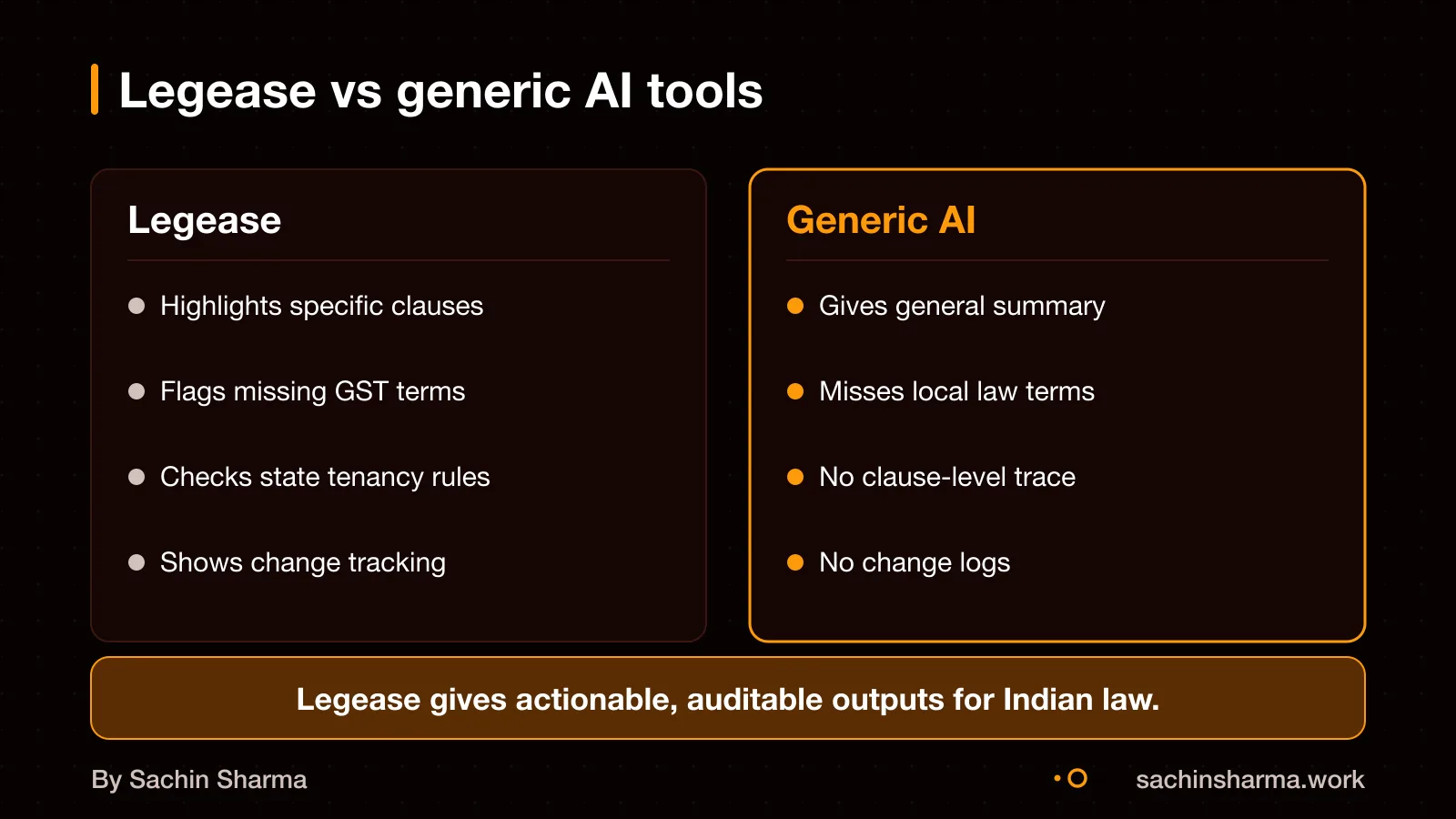
Since legal tools must align with local regulations, you should ask your vendor directly if their product covers Indian statutes and regional variations. A tool trained only on Western contracts may miss key requirements in Indian agreements.
As part of due diligence, request a sample review of an Indian contract from any AI legal tool you consider. This will show how well it interprets local language and jurisdictional nuances. You can learn more about your duties under India's DPDP Act by reading the guide on consent for apps.
Where is contract data stored?
Legease's data storage model is not confirmed in the available information. I did not build it as a client project, and its public documentation does not state where contract data is stored [unknown].
You should ask the vendor directly whether data is stored in India, as this affects compliance with laws like the Digital Personal Data Protection Act. Insist on written confirmation of encryption for data at rest and in transit, and clarify whether users can delete their data permanently.
For sensitive legal documents, only proceed if the vendor provides clear, verifiable answers to these questions. You can read more on how to comply with DPDP Act how to comply with DPDP Act.
Do you still need a lawyer with Legease?
Yes, you still need a lawyer when using Legease. AI can read contracts and flag risky or unusual clauses, but it cannot give legal advice or take responsibility for decisions. A human lawyer must review any flagged terms and decide how to respond. For example, if Legease highlights a non-compete clause that seems too broad, only a lawyer can say whether it holds up in an Indian court. AI supports the process by cutting review time, but the final call must come from a qualified legal expert. This is true for all AI legal tools today.
When Legease should not be used
Do not use Legease if you need AI to make final decisions on high-stakes contracts, such as mergers, large investments or long-term partnerships. AI can miss context, and Indian contract law often depends on subtle wording and precedent. Always have a qualified lawyer review critical agreements. This is not a substitute for legal advice.
Legease was built as a client project. Whether it is now a product available to others or a custom solution for one business is not public. I cannot confirm who owns the code or if it can be licensed. You should clarify ownership and usage rights before adopting any similar tool.
If your business deals with sensitive personal or financial information, you must ensure compliance with India’s Digital Personal Data Protection Act.
What to do if you want to build something like Legease
What to do if you want to build something like Legease
Start by writing down the types of contracts you review most often. This helps define the scope and tells us what the AI must learn. You also need to decide if you want a custom tool for your team or a product for others.
Check the data laws that apply to your business. If your contracts have personal or financial data, you must plan for secure storage and user consent. India’s Digital Personal Data Protection Act may apply, so talk to a legal expert early.
Ask how the AI explains its findings. You should be able to see which clauses it flags and why. Avoid tools that make changes without showing their work. Also, ask if the system works offline or sends data outside India, this affects privacy and control.
Know that AI speeds up review but does not replace legal advice. You still need a lawyer to sign off on final versions, especially for new or high-risk deals.
How should I compare legal AI tools for my business? Start with a demo of each tool and compare their specifications in detail. Check how easy it is to use and whether it allows customization. Focus on flexibility and integration with your current systems. Compare features side by side, especially for clause detection and risk flags.
What should I ask during a demo? Ask whether the tool supports Indian contract law and local compliance, even if it claims broad customization. Confirm where your data will be stored and who can access it. Request a sample audit trail showing how the AI reached its findings. Ask if human review is built into the workflow, not just added on.
Which tool is best for my team? There is no one-size-fits-all choice. If your team needs customization, test tools like Legitt AI. If you serve diverse clients, a platform that addresses different audiences may work better. Use the demo to see which fits your team’s size, skills, and workload.
Related reading: how to hire a Flutter developer.
Next step: message me on WhatsApp with what you want to build. No forms, no sales team.
Message me on WhatsAppThe thinking
- 01
Problem
Businesses waste hours reviewing contracts, missing risky clauses and relying on lawyers for routine checks.
- 02
Decision
Build Legease in Flutter with AI assistance to highlight risks in plain language, keeping human judgment central.
- 03
Why it holds
Cross-platform reach and client control matter more than web-only tools. AI speeds review but cannot replace legal advice.
What it includes
- AI-powered clause analysis
- Plain-language risk summaries
- Cross-platform Flutter app
Questions people ask
Legease is a Flutter AI legal-document platform. Whether it is for sale or custom-built for a client is not confirmed. If you need a similar tool, I can build one for your use case.
Yes, Legease runs on mobile and desktop. Legease is built using Flutter for a single codebase targeting iOS, Android, Web, and Desktop.
Legease uses `file_picker` for document import. The specific file types supported are not confirmed. You may test it with common formats like PDF, DOCX, or TXT. For exact support, check the app's import function.
Compliance with India's Digital Personal Data Protection Act is not verified. Check this for your case with a data protection officer or lawyer.
Test the tool on real contracts with known risky clauses, then verify its findings against a legal expert's review. Compare outputs for consistency. No accuracy claims for Legease are published.
There is no evidence that Legease can compare two contracts. Its documented function is to read and explain single documents. For side-by-side analysis, you may need a different tool or manual review.
E-signature support is not confirmed. Legease focuses on document reading and explanation. If you need signing, discuss it as a custom feature.