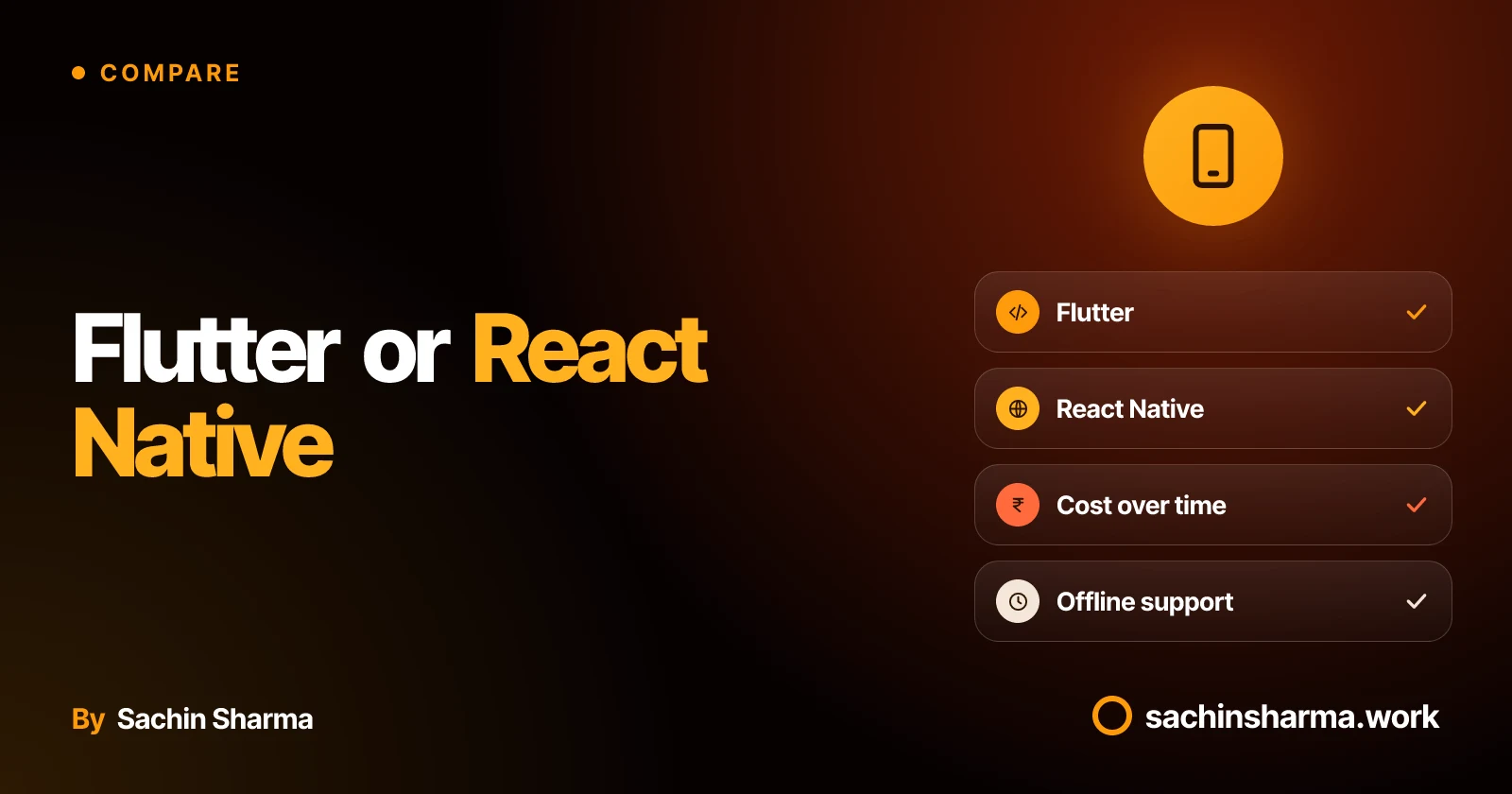
What are Flutter and React Native?
Flutter and React Native let you build apps for both Android and iOS using one codebase, so you do not need two separate teams. This cuts cost and speeds up delivery for startups.
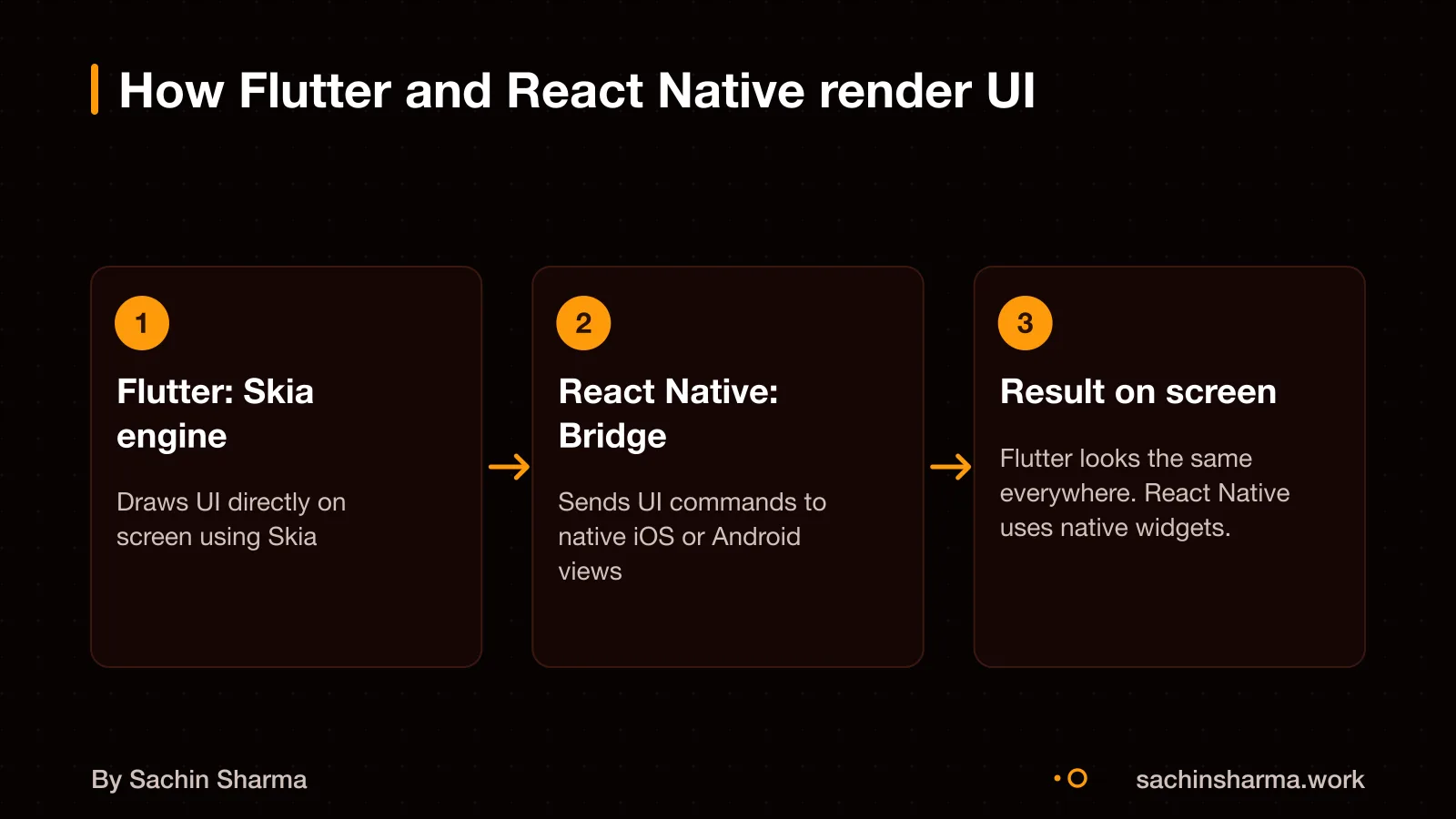
Flutter uses the Dart programming language and draws every pixel of the UI itself using the Skia graphics engine. It does not use the phone’s built-in buttons or menus. This means your app looks the same on all devices.
React Native uses JavaScript and React, and works by sending instructions to the phone’s native components through a bridge. So it uses real platform widgets, which can make apps feel more familiar to users.
For example, a button in Flutter is painted by the app, while in React Native it is a real Android or iOS button. You can read more about how this compares to building [native or cross-platform apps](/compare/native-or-cross-platform-app/).
Cost: Flutter vs React Native
Flutter and React Native both cut costs by letting you build for iOS and Android at once. As an estimate, this shared codebase saves about 30% versus two native apps. Upfront, React Native may cost 15 to 25% less than Flutter due to more JavaScript developers and lower hourly rates. But over three years, Flutter often has lower total cost because of fewer bugs, less testing and stable updates.
Hidden costs differ. React Native apps may face unstable third-party libraries and need costly over-the-air (OTA) update systems. Flutter’s risks are fewer skilled Dart developers and larger app sizes, which can affect downloads on low-end devices. As an estimate, assuming a mid-sized Indian startup app with core features. Assumption: based on current market rates and team structure.
| Cost Type | Flutter | React Native | |
|---|---|---|---|
| Upfront (estimate) | ₹15 to 25 lakh | ₹12 to 21 lakh | Assumption: based on current market trends and team structure. |
| 3-year ownership (estimate) | Lower due to stability | Higher due to maintenance risks |
These are estimates based on current market trends and team structure assumptions. Actual costs depend on your app’s features, team location and long-term support needs.
Want a rough idea? Send your app’s core features. I’ll reply with what drives cost up or down.
Message me on WhatsApp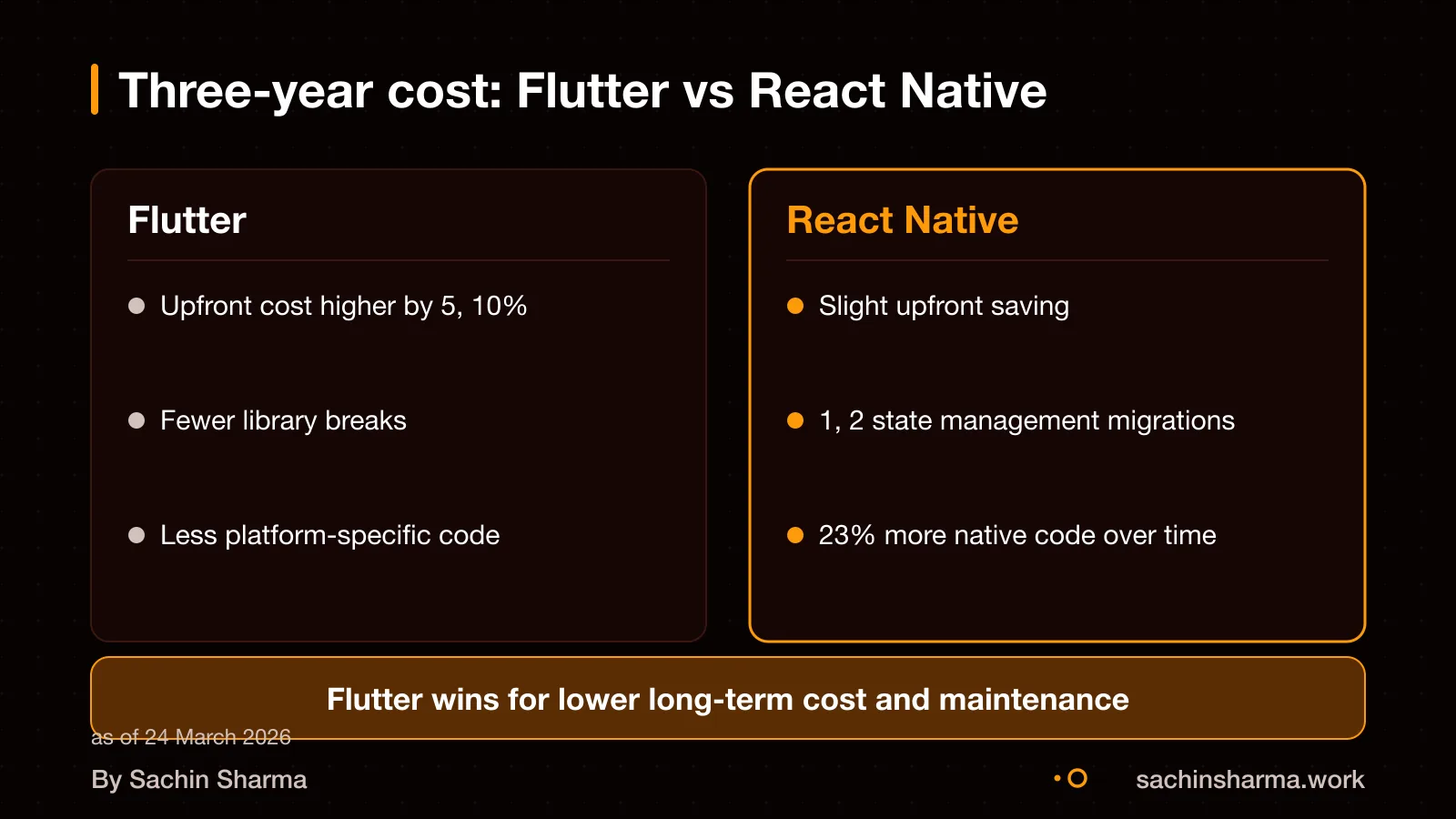
Development time: which is faster?
Flutter builds apps faster for most Indian startups. A simple MVP can be functional in 4-8 weeks with React Native. Flutter can match or beat that timeline for teams starting fresh. Flutter’s hot reload updates code in real time and keeps your app state, so changes can be seen instantly when tweaking buttons or layouts. React Native has hot reload too, but it resets app state more often, slowing down fine-tuning.
For updates, Flutter apps need less rework. One 130,000-line Flutter app took just four hours to test after iOS 17 launched, with no code changes. The same app in React Native would have taken days to fix. This saves time and cost when new OS versions arrive. If your team already uses React or web code, React Native speeds up early work. For most others, Flutter shortens the full timeline from start to launch.
Which fits your team's skills?
Yes, web developers can use React Native with less learning because it runs on JavaScript and React, which they already know. You need to learn Dart for Flutter. React Native has a significantly larger pool of developers in India, making it easier to hire and scale your team at competitive rates. This can shorten your lead time if you plan to grow the team fast. If your team already knows JavaScript, React Native lets them move faster without a steep learning curve. But if you are open to learning new tools and want stronger UI control, Flutter is still a solid choice with growing adoption.
Offline support: which handles poor internet better?
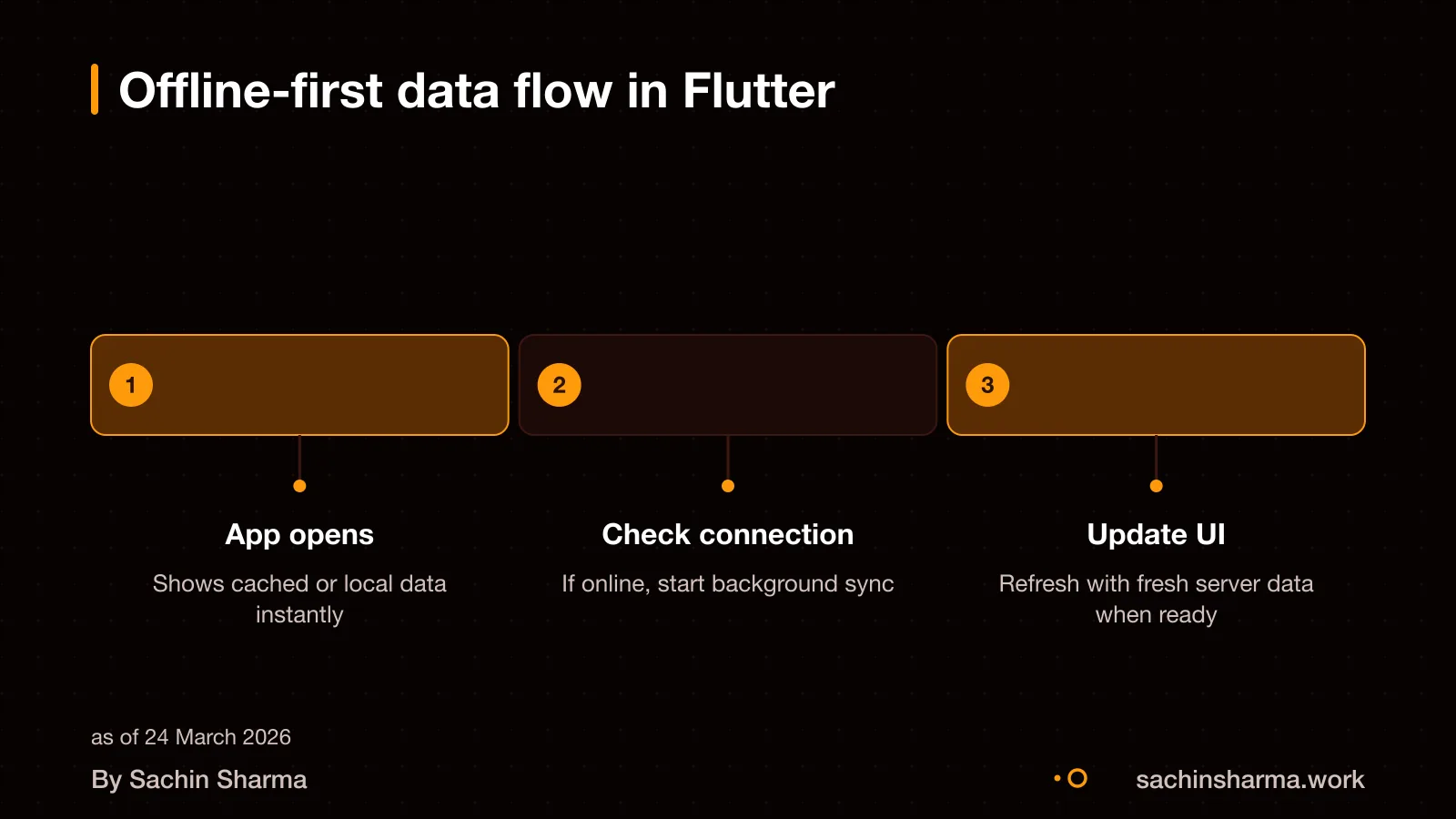
Flutter can use a Stream to first show locally stored data, then emit data from the server. This ensures fast access and does not depend on internet connectivity. Offline-first Flutter apps can use approaches like storing data locally and syncing when online.
React Native can also support offline use, but it depends heavily on how the app is built. It lacks Flutter’s built-in offline-first design pattern, so developers must add this logic manually. Without careful planning, React Native apps may show blank screens or errors when offline.
This matters in India because internet quality varies. Many users rely on patchy 3G or shared connections, especially in smaller towns and rural areas. An app that works offline keeps users engaged even when the network drops.
For example, Loopin, an offline-first habit tracker in Flutter, stores user entries locally and syncs to Google Drive when online. This ensures no data loss and a smooth experience on weak networks.
UI and user experience: consistent or native?
Flutter apps look identical on iOS and Android because Flutter draws every pixel itself. This gives you full control over design, which is good if your brand needs a unique, custom look. You can build complex animations and custom widgets without limits.
React Native apps use real native components, so they look and feel like apps made for each platform. Buttons, menus and screens match what users expect on their phone. This helps if you want your app to blend in with standard iOS or Android design.
For custom design, Flutter is better. It does not rely on native widgets, so you can change every detail. React Native can be customised, but it takes more work to override the native look. If your app needs a distinct visual style, Flutter gives you more freedom from the start.
Risks with Flutter
Dart is less common among Indian developers. You may take longer to hire or train your team. This does not block your project, but it adds effort. Flutter plugins are stable for common features like payments, maps and cameras. For rare hardware or system functions, you might need custom native code. Even with Flutter, you still write some native code for deep device integration, such as biometrics or background tasks. As part of normal maintenance, your app will use 5 to 8 platform channels. This happens over its first three years to link Flutter to native Android and iOS features. These are small code bridges, not full rewrites. You need a developer who knows Kotlin or Swift for these parts.
Risks with React Native
React Native apps often face library instability because many npm packages are community-built and not well maintained. This means you may need to replace or fix libraries often, raising long-term costs. As an estimate, teams spend 10 to 15% of their maintenance budget on library migration. State management tools also change quickly. On average, React Native apps go through 1.7 state management migrations in the same period. This adds rework and slows feature delivery. Over time, you end up writing more platform-specific code. React Native apps have 23% platform-specific code on average. This reduces the benefit of cross-platform development and increases testing effort.
Not sure if your project has high risk? Tell me your team size and tech stack. I’ll say if Flutter or React Native fits better.
Message me on WhatsAppReal apps built with each framework
Flutter is used by Nubank, Google Pay, and several leading payment platforms. These apps rely on Flutter’s fast performance and consistent design across devices. React Native is used in enterprise systems. Both frameworks now support extended use cases: React Native officially runs on Meta Quest devices, enabling apps for virtual reality. These real-world uses show that both frameworks can scale, but Flutter has stronger traction in consumer finance apps in India.
Why this matters for Indian startups
Patchy internet is common in tier-2 cities and rural India, so your app must work offline. Flutter shows locally stored data first, then updates it when online. This keeps your app usable on 2G networks and weak connections.
Fast OS update support matters because new Android and iOS versions roll out quickly. This saves time and effort when updating.
Team size affects hiring speed. If you plan to scale fast, this can shorten your hiring timeline. But if you start small and value stability, Flutter’s consistency may suit you better.
How to check code quality
Use built-in tools to catch errors early and ensure reliable code. React Native includes ESLint for finding code problems and TypeScript for checking data types by default. The default template of React Native ships with Jest, a testing framework. These help maintain code quality but run only in a JavaScript environment. They do not test the actual iOS or Android platform code behind your app’s features.
For platform-level bugs, you need end-to-end (E2E) tests on real devices or emulators. These simulate user actions like tapping and swiping to verify that the app works as expected on each OS. While not set up by default, tools like Detox or Appium can fill this gap.
You must set them up yourself.
When working with a developer, ask to see their test coverage report and a demo on a budget device. This shows how well the app will run for real users.
How to start with me
To get a recommendation, you need to share what you want to build, your timeline, and your team’s skills. I will match your needs to the right framework and team setup. You own the full source code after delivery. It is your product, and you can host, modify or audit it as you wish. Yes, you can switch developers later. All code is documented and written in standard Flutter or React Native patterns, so any qualified developer can take over. I use version control and clear commit logs to make handovers smooth.
Next step: message me on WhatsApp with what you want to build. No forms, no sales team.
Message me on WhatsAppWhen this advice is wrong
When this advice is wrong
Pick React Native if your team already knows JavaScript and React for web apps. You may benefit from faster development with web developers and third-party library integration.
Consider React Native if your app requires rapid third-party library integration.
If you have an existing React web app, React Native may allow some component. State management reuse, potentially reducing duplication, based on the assumption that such reuse is feasible. Flutter does not support web code reuse.
For help choosing who builds your app, see our guide on hiring a freelancer or agency for a first app.
Related reading: Loopin, an offline-first habit tracker.
Related reading: App or website first?, Best React Native developer in Raipur: how to choose, in 8 checks.
Assumptions behind the numbers
- Assumes 6-month build, 8 developers, 3-year ownership, and 2 major OS updates.
- Flutter saves 15% on bugs and 10% on rewrites over React Native.
- Developer rates in India average ₹1,200/hour for mid-level cross-platform developers.
- A typical app requires 1,200–2,000 hours to build.
Pick your situation
I build mostly in Flutter and benefit from that choice. However, the table below also shows when React Native is the better fit.
Pick your situation
React Native wins. React Native uses JavaScript and React, so web developers can contribute sooner. If your team already knows these, you save on training time.
The whole comparison
| Flutter | React Native | |
|---|---|---|
| UI Consistency | Identical on both platforms | Platform-native look |
| Offline Support | Built-in patterns for local-first | Requires extra setup |
| Developer Fit | Dart, mobile-first devs | JavaScript, web devs |
| Upfront Cost | ₹1.26–2.10 lakh | ₹1.13–1.78 lakh |
| 3-Year Total Cost | Lower due to fewer bugs | Higher from library churn |
| OS Update Effort | Minimal testing needed | Days of code changes |
Whichever you choose, ask these
- Can you show past offline apps?
- Will my web team be able to help?
- What happens during OS upgrades?
- Do you offer post-launch support?
Questions people ask
I recommend Flutter for most startups because it can lower the 3-year cost of ownership with reduced QA cycles. Fewer platform-specific bugs, and more predictable maintenance. For fintech apps, Flutter is generally better. If your team already works in React and JavaScript, React Native may speed up early development.
Choosing React Native may involve additional maintenance due to npm package instability. As teams spend 10 to 15% of the maintenance budget on library migration. Choosing Flutter may slow early progress if your team must learn Dart. Both need platform-specific code over time, but React Native apps often need more of it.
Migration usually means a full rewrite, not a smooth transition. I have no data on cost or success rate for such moves. As an estimate, assume it will cost 70 to 100% of a new build. Start with the right framework to avoid this cost later.
You own the code only if your contract says so. Framework choice does not affect ownership. I recommend a clause that grants full intellectual property rights to you. Ask your developer to include this in the agreement.
Yes, you can switch developers if the code is well-documented and tested. I deliver every project with full documentation and test coverage. Without these, new developers will spend time guessing how things work.
As an estimate, annual maintenance costs 20% of the build cost for bug fixes and OS updates. React Native may cost more over time due to frequent library changes. Flutter’s stable engine reduces such risks, leading to more predictable costs, based on the assumption that engine stability reduces maintenance burden.
I offer 90 days of free bug fixes after launch. After that, you can choose a retainer for ongoing updates and OS compatibility work. This keeps your app running smoothly as Android and iOS change.
Flutter compiles to native code. It runs at 60 FPS on standard UI and up to 120 FPS on high refresh rate devices.
React Native has a significantly larger pool of developers in India, which means more competitive rates. Faster hiring if you need to scale the team. Flutter is growing fast, but fewer Indian developers know Dart well. This may affect hiring speed and cost.